

Water leaders, politicians discuss key issues during Water Week
Water Week press conference brings together water experts to highlight sector landscape
“Where water flows, food grows.”
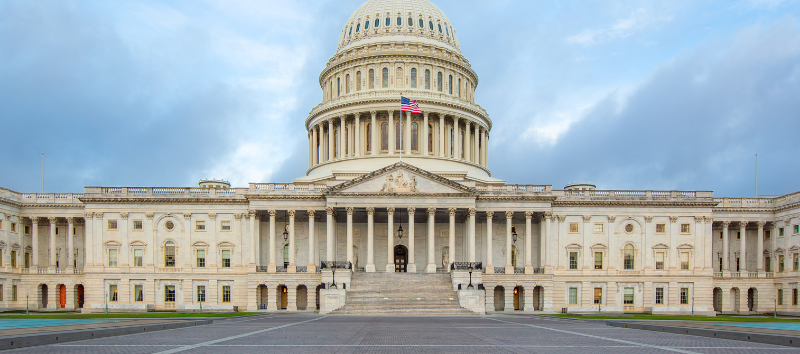
Those words began an address from United States Rep. Jim Costa (D–California) during an ASTERRA-sponsored press conference at Water Week in Washington, D.C., on April 15.
Joined by U.S. Rep. Greg Stanton (D–Arizona), Costa’s words kicked off a series of four panels moderated by Paul Gagliardo, principal consultant at Gagliacqua and host of The Water Entrepreneur podcast, highlighting water sector challenges and opportunities.
Stanton and Costa served on the first panel of the day, followed by a “presidents’ panel” that included voices from industry associations including Water Environment Federation President-elect Paul Schuler; American Public Works Association President-elect Robert Garland; and the Director of Water at EPIC, Denis Schmidt. The third panel focused on utilities, featuring speakers Cynthia Baughman, water utilities technology director at the city of Garland; George Hawkins, founder and CEO of Moonshot Missions; OJ McFoy, city engineer for the city of Houston; and Kendra Morris, CEO and president of regulated water business for Veolia, North America. The fourth and final panel focused on solution providers and featured Chris Tynan, founder and CEO of Burnham; Slava Libman, CEO of FTD Solutions; Street Lee, president and CEO of McKim & Creed; and Josh Mahan, senior director at Xylem.
To begin, Costa and Stanton touched on conservation as a foundation for the water sector. Costa said much more needs to be done in terms of climate change, while Stanton specifically pointed to the West’s water challenges, saying that they directly impact all of America, and noting that the Colorado River is a diminishing water source.
With both representatives coming from Western states — specifically, states within the lower basin of the Colorado River — Stanton said their respective states are on the same team.
“We have to look into the mirror and ask ‘What else can we do in Arizona?’” Stanton said, noting that the state uses less water now than it did 50 years ago.
And while their specific water challenges may be regional, Stanton emphasized that what happens in the Western region eventually impacts all of America directly.
Despite multiple panels, key themes arose naturally in each: funding, resiliency and workforce.
Funding
When it comes to the looming end of the 2021 Infrastructure and Investment Jobs Act (IIJA) funding slated to end on September 30, Stanton noted that if there is a deal that would renew that funding in some way, especially one that includes notable public transportation funding, Congress should take it.
Pointing to the American Society of Civil Engineers’ Report Card for America’s Infrastructure, which found a USD $3.7 trillion water funding gap, Garland said the IIJA was a jump start — but still not enough.
And Schuler shared that if IIJA funding is indeed going to end, there has to be a way to continue funding already-established programs.
Schmidt highlighted how earmarks are impacting the State Revolving Funds (SRFs). At times, earmarks are being used to divert some of the Clean Water SRFs and Drinking Water SRFs appropriations into one-time grants. Because grants do not need to be repaid, this reduces the SRF program’s long-term capacity.
“When you take money out of a revolving system, it stops revolving,” she said.
Put simply, Garland likens the necessity of funding to filling gas tanks.
“How do you keep a car running when running out of fuel?” he asked. “How do you keep infrastructure running without funding?”
Resiliency and Workforce
When it comes to the future of the water sector, two key topics repeatedly came up — resiliency and the aging water workforce.
Garland noted that resiliency funding, especially before and after natural disasters, is crucial, while Costa said the U.S. population and water workforce need to get better and smarter when it comes to climate change.
With a changing climate, increasing storm frequency and severity, and a widening funding gap, a strong workforce is more necessary than ever. However, the water workforce represents a challenge in itself.
Garland cited that one in three engineering jobs are unfilled, and 50% of utility professionals are aged 50 or older and near retirement. This gap could result in the sector losing key institutional knowledge.
During Water Week, the U.S. Environmental Protection Agency announced plans to revitalize the 2020 Workforce Initiative. An agency release explained that this effort will map collaboration with those in the sector to support the nation’s water workforce.
With a lot on the line for water, many speakers talked about the resource as a great unifier, saying it should be a non-partisan issue.
“Water is a local issue at the end of the day,” Schuler said.
Those in the sector know this to be true, and Costa’s motto about food growing where water flows is just the beginning of what the resource does. But, to those outside the sector, it may not be as obvious. To lighten the load, Stanton closed his remarks by adding to Costa’s food thoughts.
“If you like salad, you better hope we work out our water issues,” he said.


Related Areas

Latest News

More WEF Blogs
National Stormwater Policy Forum highlights sector needs
Funding, regulatory updates top list of 2026 priorities for U.S. stormwater sector Stormwater professionals from across the United States gathered in Washington, ...
Continue Reading
Applications are Open for WEFTEC 2026 Communications Scholars
Love water and storytelling? This scholarship can help you experience WEFTEC in person — and bring new ideas back to your team.
Continue Reading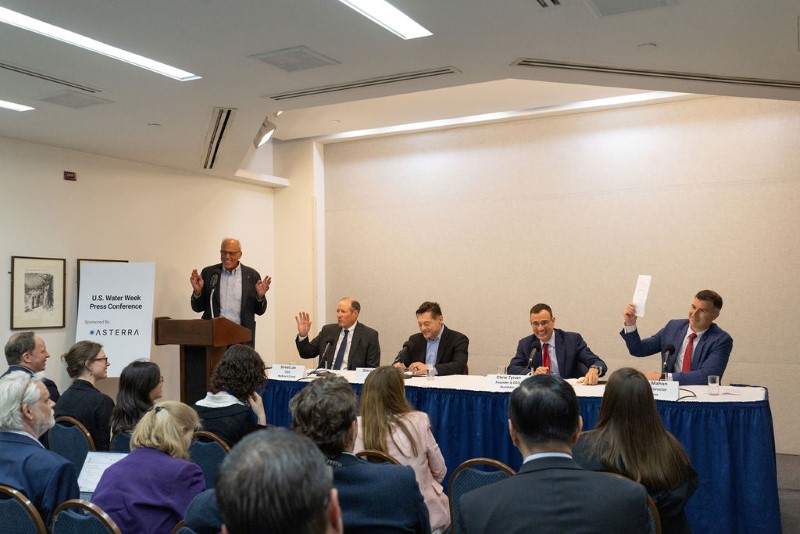
Water leaders, politicians discuss key issues during Water Week
“Where water flows, food grows.” Those words began an address from United States Rep. Jim Costa (D–California) during an ASTERRA-sponsored press ...
Continue ReadingWhere the Water Community Connects
See how WEF connects the people and ideas driving clean water and public health. Membership gives you access to benefits, resources, and a network committed to impact.
EXPLORE ALL PRACTICE AREAS
WEF is a source of high-quality technical resources featuring the latest research, news, and education. WEF's members and other credible resources have created and compiled this information into the Practice Area groupings listed in the dropdown menu.